
Top 5 Alternative Things to Do in Stanley Park
Most tourists visiting Stanley Park will rent a bike, snap a photo of the Lions Gate Bridge, and leave. But there’s a lot more to the park than what’s offered on the typical tourist beat. Here’s a list of five things you can do in Stanley Park that the average visitor has no idea about.
At Forbidden Vancouver Walking Tours, we deal in the stories that don’t make it onto the glossy postcards. If you want to understand the real city, you have to look closer…
1. Track Down the “Two Spirits” Guerrilla Carving
Forget the officially sanctioned monuments for a minute. Deep in the woods near Second Beach sits the “Two Spirits” carving, an unauthorized piece of guerrilla art.
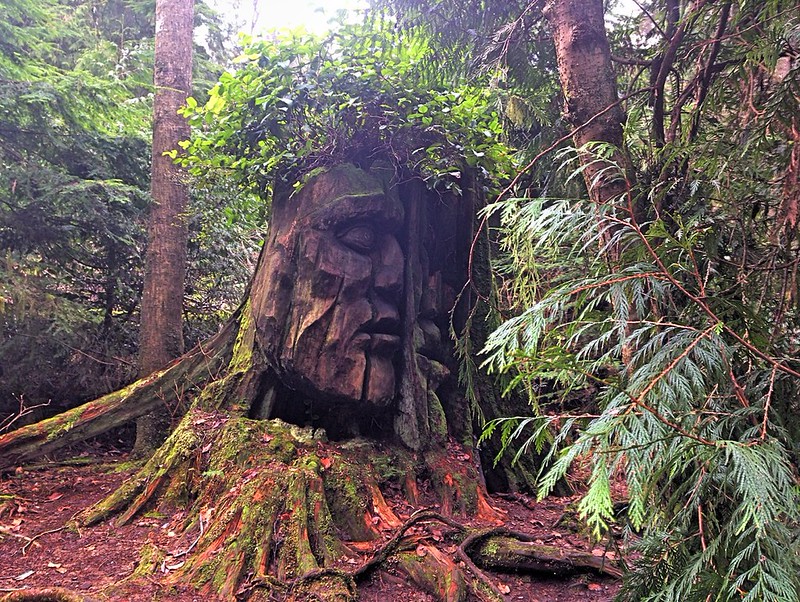
Photo Credit: Kyle Pearce. www.animist.eco
Nobody knows who created it, and the Park Board refuses to officially recognize it. The unknown artist carved two distinct, watchful silhouettes into a massive, decomposing tree stump. Finding it just off Rawlings Trail feels like uncovering a local secret. Just keep your eyes peeled; the forest reclaims the wood a little more each year.
2. Peer into Restricted Deadman’s Island
Early Vancouver had a highly practical approach to things it didn’t want to deal with: it put them on an island.
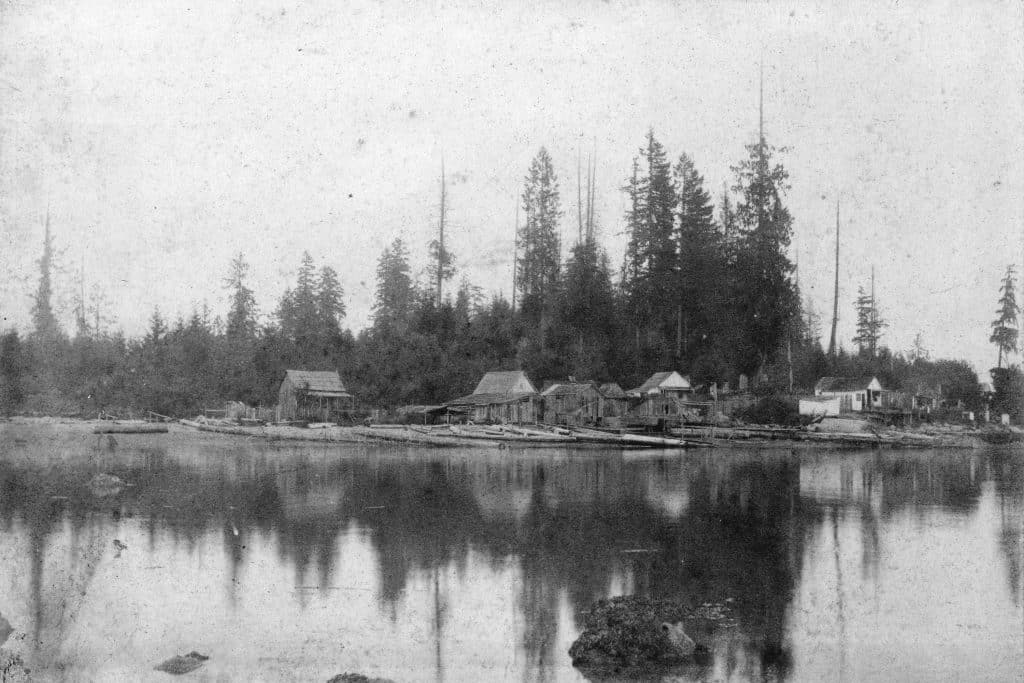
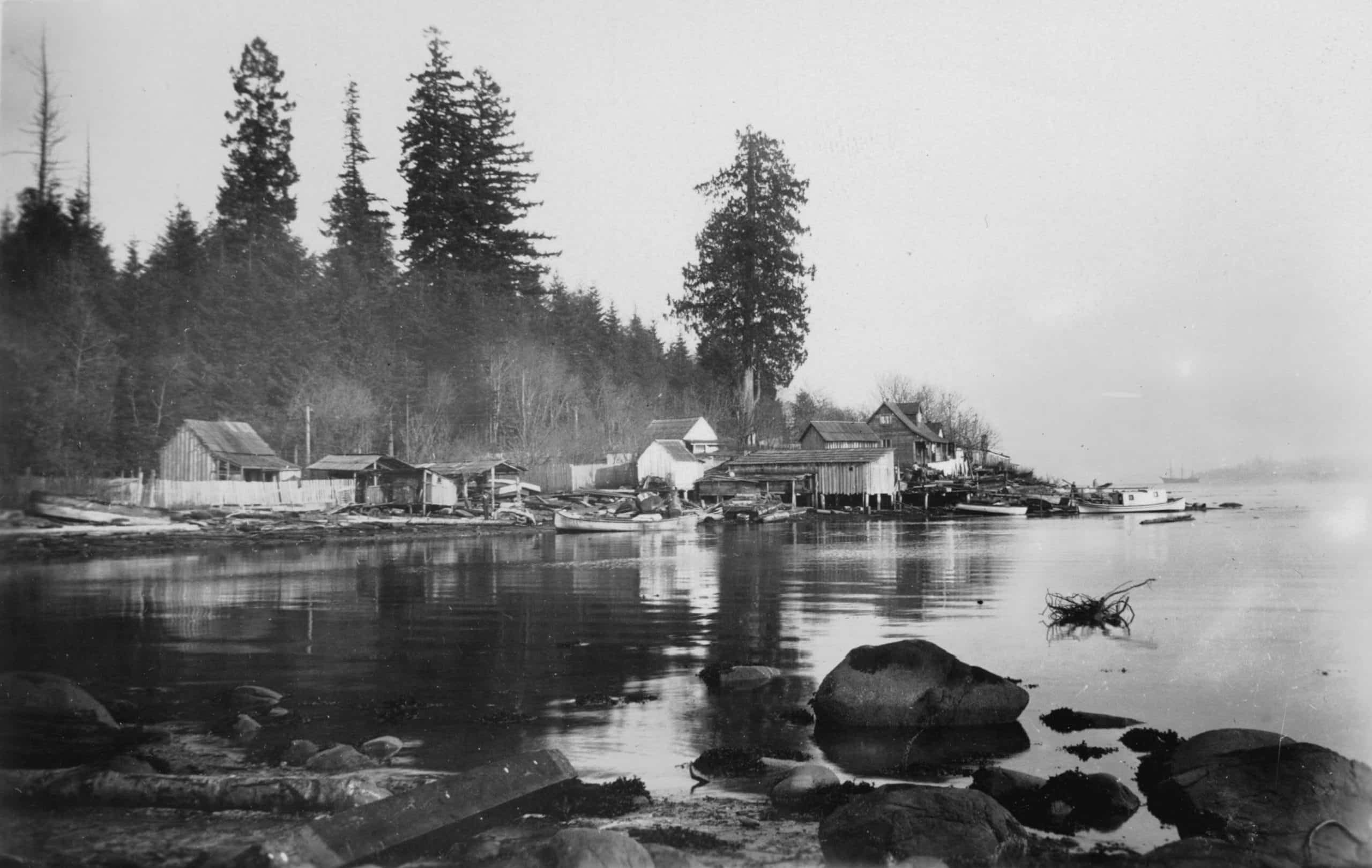
CVA Item: St Pk P332.1. View of squatters shacks on Deadman’s Island. 1891
From the seawall, look across Coal Harbour at the small, forested island just off the Stanley Park shore. Today, it’s protected by a locked gate and occupied by the naval reserve, HMCS Discovery. You can’t walk on it, which only makes its history more macabre.
Long before European settlers claimed it, the island served as a tree-burial ground for the Squamish people, who buried the dead in cedar boxes lashed to the upper boughs. According to Squamish oral history, in ancient times it was also the site of a brutal battle that left 200 warriors dead, after exchanging themselves for hostages.
In the 19th century, settlers repurposed the island as an unofficial cemetery, since Mountain View Cemetery wasn’t opened until 1886. People buried there included ethnic minorities, babies that had not been baptized, sex workers, and people who died in debt. The more “respectable” members of Gastown society were buried in a different unofficial graveyard, near Brockton Point.
When smallpox struck Vancouver in the late 1880s and early 1890s, the island was used as a “pest house,” where victims could be quarantined. For those that died during their stay, the cemetery on the island became their final resting place.
HMCS Discovery was established in 1944 and simply built over top of the cemetery. Today, naval reservists march directly over an undisturbed cross-section of Vancouver’s deceased.
That conflict over the land is not confined to the past. The status of Deadman’s Island remains deeply contested, sitting at the intersection of overlapping Indigenous land claims and federal military use. Because Vancouver and its surrounding waters were never surrendered through treaties, the island is considered unceded territory. You can’t get past the gates, but you can certainly have a good look from the seawall and think back to its dark history.
3. Catch the Third Beach Drum Circle (Before the Cops Shut it Down…)
Third Beach faces due west, offering an uninterrupted view of the sunset over the Salish Sea. But if you show up on a sunny Tuesday evening in the summer, you aren’t just going for the view. You’re going to witness a rare moment of unscripted, un-permitted culture in a city that famously loves its rules.
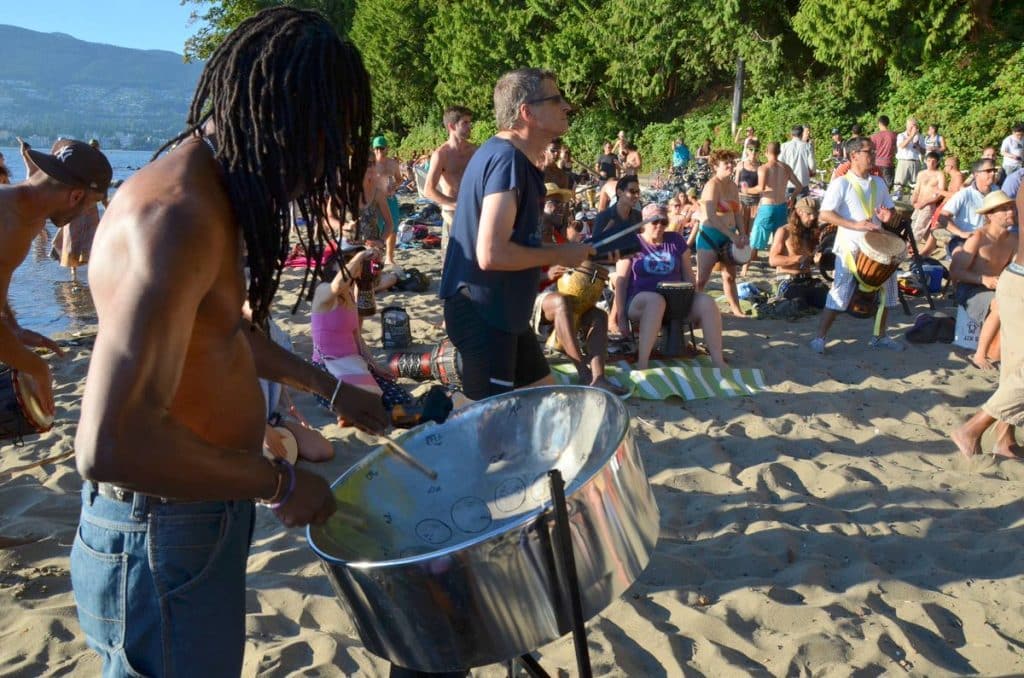
Photo Credit: https://stanleyparkvan.com/
Known as the Brahm’s Tams Drum Circle, this weekly gathering started organically around 2005 with just a handful of locals, some hand drums, and acoustic guitars. Over the years, and especially as people sought connection after pandemic lockdowns, it swelled into a massive, pulsing beach party drawing thousands. It’s loud, chaotic, controversial, and completely free.
Naturally, the city bureaucracy panicked.
Do the police raid it? Not in the cinematic, riot-gear sense. But they certainly tried to regulate it. As the crowds grew, the Vancouver Park Board and the Vancouver Police Department ramped up their presence, citing concerns over open liquor and garbage. Today, officers and rangers do patrol the sand, in an attempt to ruin the fun, or to manage the mayhem depending on who you ask.
But the circle stubbornly survives. It remains one of the most authentic, defiant experiences in the city. The drummers still hammer out a collective rhythm, people still dance in the sand, and the entire beach erupts in cheers the exact moment the sun dips below the horizon.
Bring a blanket, pack out your own trash to deny the city a reason to shut it down, and go experience Vancouver letting its guard down.
4. Abandon the Pavement for the Interior Trails
If you want to get off the seawall and wander through a west coast rainforest, you need to hit the dirt.
Stanley Park features 27 kilometres of interior forest trails. Navigate the dense canopy along the Cathedral Trail, or head toward Beaver Lake, which is a fascinating case study in ecological succession. It is currently undergoing rapid natural infilling, fuelled in part by water lilies introduced in 1937, the shallow water is actively transitioning from a lake into a marsh and meadow ecosystem. Along these inland paths, you will find massive Douglas firs and western red cedars. This is the untamed, complex version of Vancouver that most visitors walk right past.
5. Spot the Heavyweights in the Water
Vancouver sits squarely on the edge of a massive, thriving marine ecosystem. You don’t have to leave solid ground to witness it; you just need to know where to look.
From the seawall, particularly the stretches between Brockton Point and Prospect Point, watch the water. Harbour seals are almost a daily guarantee, frequently hunting or watching you right back from the kelp beds. If you’re patient and lucky, you might also spot transient pods of orcas (killer whales) breaching in English Bay or Burrard Inlet. Transient orcas specifically enter these narrow inlets to hunt the local marine mammal populations, including those same harbour seals. Depending on the time of year, other possible animal sightings you might catch include bald eagles, otters, and sea lions.
Dig Deeper with Forbidden Vancouver
Reading about Stanley Park’s buried past is one thing, standing on the exact ground where it happened, with a guide who knows the historical record, is another.
You can explore the seawall and interior trails on your own, but you can also walk them with an expert who separates fact from legend as you go. Forbidden Vancouver walking tours are built around exactly this kind of hidden-in-plain-sight storytelling:
- On The Dark Secrets of Stanley Park Tour, you will spend about two hours walking the seawall and forested trails. Along the way, you will trace the tragic history of the Indigenous village of Whoi Whoi, where families were forcibly evicted, unearth the secrets of Deadman’s Island, and uncover the actual crimes, riots, and political intrigue that shaped the city’s greatest park.
If you are the type who wants the definitive history behind the scenery, that is exactly what our tours are built to deliver. Book a walk with us, and step into the real Vancouver.


