
25 Best Vancouver Field Trips for Elementary Students (Fun & Curriculum-Aligned)
Looking for the best field trips in Vancouver for elementary students? Whether you’re a classroom teacher, homeschool parent, or group organizer, Metro Vancouver is packed with hands-on, curriculum-aligned experiences that bring learning to life from Gastown’s history-soaked streets to old-growth rainforests and world-class science centres.
Field trips today look nothing like they used to. What once meant a predictable visit to a museum or aquarium has now expanded into a world of hands-on learning, immersive storytelling, outdoor exploration, and curriculum-aligned adventures everywhere you look in Metro Vancouver.
For teachers, homeschooling parents, and caregivers, the Lower Mainland offers an excellent selection of field trip experiences that spark curiosity, build confidence, and help students make real-world connections to what they learn in the classroom.
To make planning easy, we’ve organized this guide into four categories:
HISTORY — stepping into the stories that shaped BC
NATURE — learning from animals, ecosystems, and the environment
CULTURE & ART — connecting with people, creativity, and community
ADVENTURE & PLAY — learning by experiencing, building, and exploring
Let’s dive in!
HISTORY FIELD TRIPS
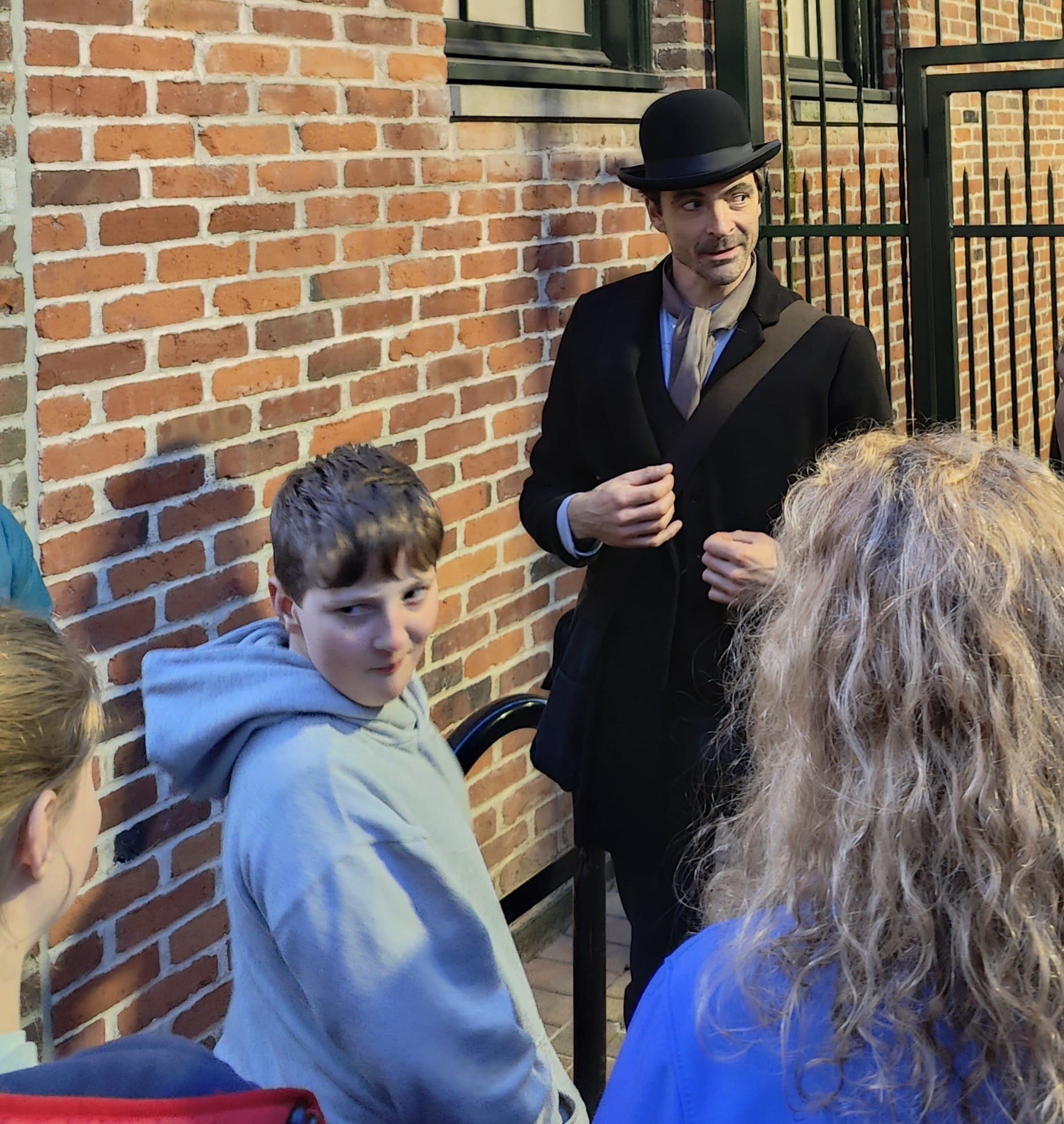
1. Forbidden Vancouver Walking Tours
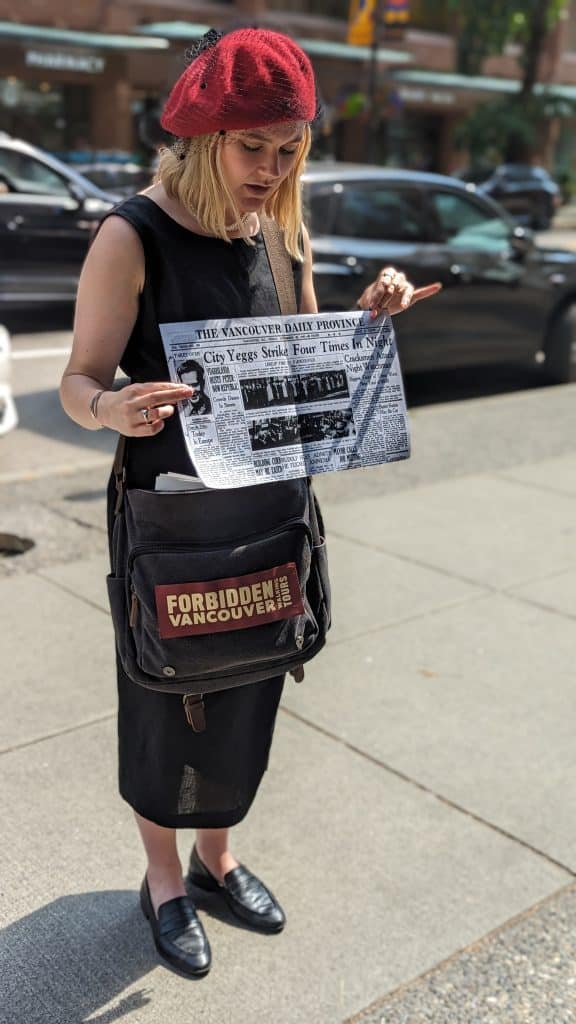
Storyteller Rachel in action in Gastown
On an experience with Forbidden Vancouver Walking Tours, students embark on a fully immersive, storyteller-led walking tour across a historic Vancouver neighborhood. From Gastown’s cobblestone streets to Stanley Park’s hidden trails, every corner tells a story. Kids step into the shoes of historical figures and explore real events such as the Gold Rush, Prohibition, the early immigrant experience, and Vancouver’s industrial growth.
Activities include captivating storytelling, visits to important city landmarks, examining archival photos, and connecting past events to today’s city life.
The company’s Gastown History Walking Tour is custom-built for elementary age students and covers stories essential to understanding the role of European exploration and colonization on the Pacific coast of Canada. From the nearby arrival of explorers José María Narváez and George Vancouver in the 1790s, to early settler Gassy Jack Deighton in the 1860s, to the successive waves of immigration that followed and continue to this day, Gastown is the perfect neighbourhood in which to examine both continuity and change in our city’s history. ‘
Unlike museums and art galleries, in this immersive experience you’ll literally walk the ground where Vancouver as we know it began. You’ll discover how our city’s oldest neighbourhood has evolved over the past 150 years. Prior to the arrival of European settlers, for thousands of years Coast Salish people knew the area as Kem Kem a lay, meaning place of the big leaf Maple Tree. Today, the heart of Gastown is Maple Tree Square, which connects directly back to the original Indigenous name
Stories covered on the tour represent the evolving social and cultural tapestry of Vancouver and can be linked to current social trends as we blend past and present. Teachers love that these school walking tours spark curiosity, discussion, and critical thinking, making history tangible and engaging for Grades 4–7.
2. Burnaby Village Museum
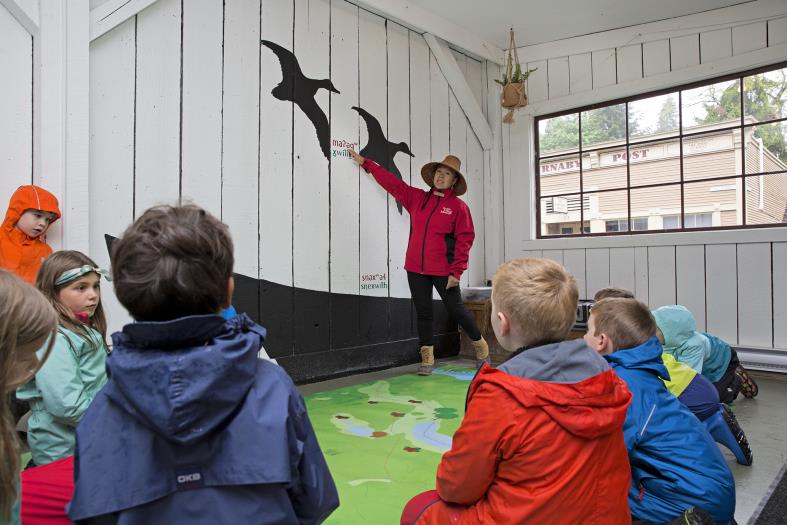
An interpreter leads a presentation to children.
Onlookers take in an exhibition at the Burnaby Village Museum.
Burnaby Village Museum recreates a 1920s heritage village complete with original buildings, a one-room schoolhouse, costumed interpreters, and a vintage carousel. Students can participate in hands-on activities, like trying old-fashioned games, exploring trades such as blacksmithing and baking, and learning about early 20th-century community life.
This field trip helps students understand historical context, compare past and present lifestyles, and experience history through touch, sight, and sound, rather than just reading about it in textbooks.
3. Chinatown Storytelling Centre
At the Chinatown Storytelling Centre, students dive into the stories of early Chinese immigrants and their role in shaping Vancouver’s community. Through artifacts, multimedia displays, and interactive workshops, children explore themes of resilience, cultural preservation, and social contribution.
Programs often include hands-on activities like artifact handling, map exploration, and storytelling exercises, giving students a personal connection to Vancouver’s multicultural history. It’s an excellent way to introduce lessons on immigration, social studies, and diversity in a dynamic environment.
4. Dr. Sun Yat-Sen Classical Chinese Garden

The picturesque traditional Dr. Sun Yat-Sen Traditional Chinese Gardens in Vancouver’s Chinatown neighbourhood.
This tranquil garden is a living classroom for culture, history, and architecture. Students learn about classical Chinese garden design, symbolism, and the philosophy behind water, rocks, and plant placement.
Workshops include tea ceremonies, calligraphy, and guided storytelling, giving students a hands-on cultural experience. Activities connect with lessons in social studies, art, and global history, helping kids appreciate cross-cultural perspectives and the importance of heritage preservation.
5. Museum of Vancouver (MOV)
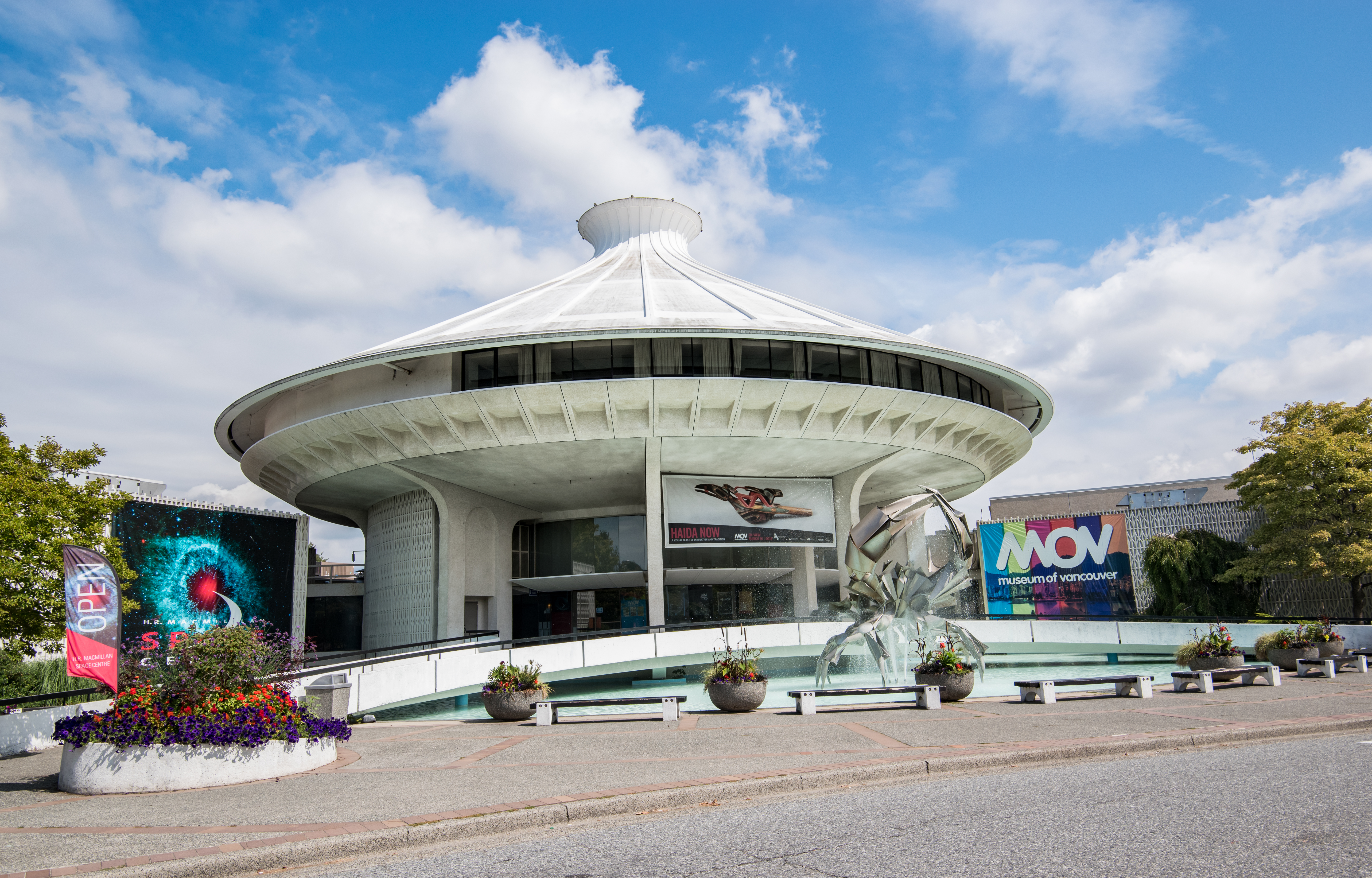
The Museum of Vancouver located in the heart of Kitsilano just steps from the beach.
MOV offers interactive exhibits that explore Vancouver’s cultural identity, urban development, immigration, and innovation. Students can handle replica artifacts, participate in museum-led workshops, and engage in storytelling exercises about community history.
Field trips here encourage critical thinking, empathy, and discussion about diversity and change over time, giving students a better understanding of how Vancouver became the city it is today. It’s a perfect complement to classroom lessons on history, geography, and social studies.
6. Vancouver Police Museum
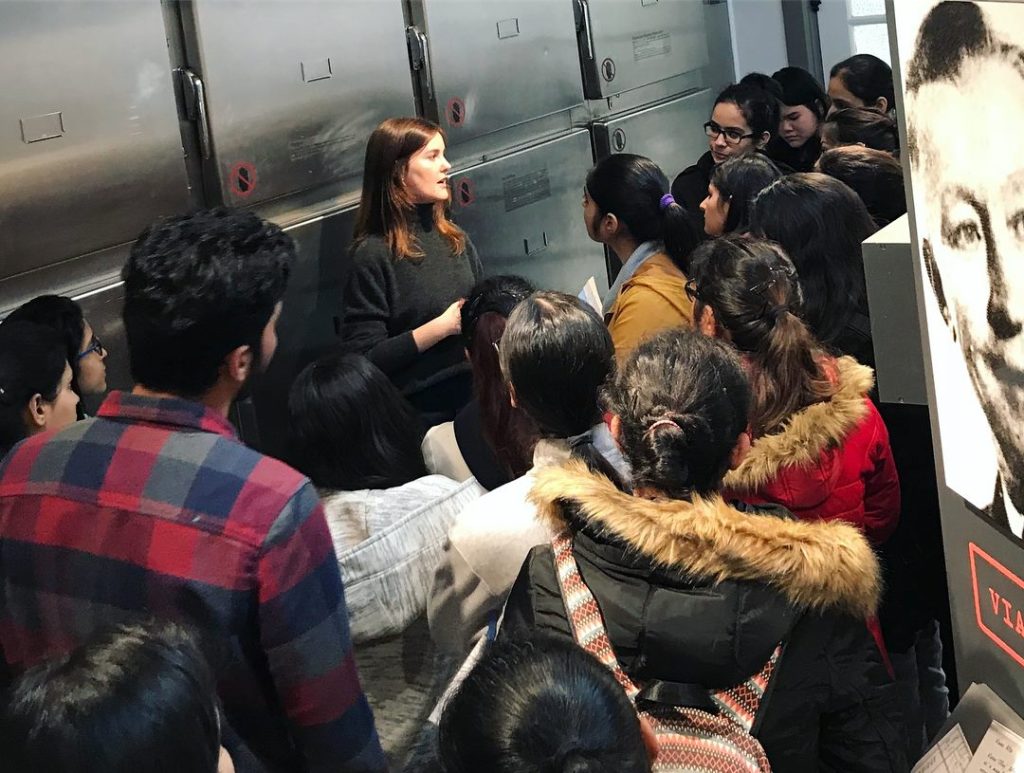
Students at the Vancouver Police Museum (C) Vancouver Police Museum
A hands-on, forensic-focused experience where students learn about crime-solving, evidence collection, and the history of policing in Vancouver. Activities may include mock investigations, fingerprint analysis, and exploring historical police artifacts.
This field trip combines thrill with education, challenging older elementary students to use logical reasoning, observation skills, and teamwork. Teachers often note that students leave excited about civic responsibility and fascinated by real-world applications of science and critical thinking.
NATURE-THEMED FIELD TRIPS
7. Stanley Park Ecology Society (SPES)

A school group enjoying their program at the Stanley Park Ecology Society (C) Stanley Park Ecology Society
Stanley Park is one of the most diverse outdoor classrooms in British Columbia, and the Stanley Park Ecology Society brings it to life through thoughtful, curriculum-aligned programs. Students explore old-growth forests, wetlands, intertidal zones, and urban wildlife habitats, all while guided by trained environmental educators.
Programs such as Urban Wildlife, Life in the Pond, and Intertidal Discovery give students the chance to observe real organisms in their natural environments — frogs, herons, raccoons, beavers, insects, and more. Kids work in teams, use field research tools, identify species, and record findings, giving them authentic early science skills.
Teachers love SPES for its focus on conservation, Indigenous ecological knowledge, and biodiversity. Students walk away with a deeper appreciation for ecosystems and how human actions impact nature in both visible and invisible ways.
8. Vancouver Aquarium School Programs
Few places spark curiosity like the Vancouver Aquarium. Its education programs go far beyond watching sea otters and jellyfish — students participate in marine biology workshops, interactive labs, and behind-the-scenes learning designed specifically for school groups.
Classes can observe marine mammals, explore tidepool ecosystems, learn how animal rescue works, and watch feeding sessions guided by aquarium staff. Younger grades love hands-on exploration activities, while older students connect with deeper themes like ocean pollution, climate change, and conservation science.
Teachers can choose from themed workshops such as:
- Ocean Detectives
- Sharks! Fact vs. Fiction
- Life in the Intertidal Zone
- Marine Mammal Rescue
The experience supports cross-curricular learning in science, environmental studies, geography, and even art and storytelling. It’s one of Vancouver’s strongest examples of learning through real-world encounters.
9. UBC Botanical Garden
UBC’s Botanical Garden offers a peaceful, immersive setting where students connect with plants through guided explorations of the forest canopy, native gardens, and ecosystem research areas. This field trip is particularly strong for lessons about plant biology, biodiversity, and the role plants play in sustaining life.
Through hands-on activities, students examine seeds, identify plant species, observe pollinators, and learn about traditional Indigenous uses of plants. The Greenheart TreeWalk — a suspended walkway high above the forest floor — gives kids a memorable perspective on how the forest layers work together.
Programs support BC curriculum units in life science, ecosystems, and sustainability, and educators are experienced in adapting content based on grade level. It’s an excellent option for teachers who want calm, sensory-rich outdoor learning that still feels adventurous.
10. Maplewood Farm (North Vancouver)
This beloved family-friendly farm has long been a favourite for early elementary students. Maplewood Farm offers a welcoming environment where kids can get close to a variety of animals including goats, sheep, cows, pigs, rabbits, ponies, and chickens.
Field trips usually include:
- Feeding and brushing farm animals
- Learning how farmers care for livestock
- Understanding where food comes from
- Guided “Meet the Animals” demonstrations
- Exploring barns and outdoor farm areas
Younger students benefit from developing empathy, responsibility, and confidence around animals. Teachers appreciate that the farm introduces concepts from the BC health and science curriculum in a gentle, age-appropriate way. Maplewood Farm also encourages discussions about food systems, agriculture, and the difference between rural and urban environments.
11. Wild & Immersive (Maple Ridge)
Located deep inside UBC’s Malcolm Knapp Research Forest, Wild & Immersive is ideal for classes wanting a full nature immersion. Programs are built around forest science, survival skills, and ecosystem exploration, offering the kind of learning that kids remember for years.
Depending on grade level, activities may include:
- Shelter-building and basic survival techniques
- Fire-making demonstrations (safety-based)
- Wildlife tracking
- Forest mapping and compass navigation
- Studying local plants, fungi, and forest layers
- Learning about human impacts on forests and climate
Wild & Immersive is run by educators with backgrounds in biology, ecology, and outdoor leadership, giving students a well-rounded understanding of forest environments. It’s especially popular for Grades 3–7 and ties directly into lessons about ecosystems, adaptation, and environmental stewardship.
CULTURE & ART FIELD TRIPS
12. Bill Reid Gallery of Northwest Coast Art
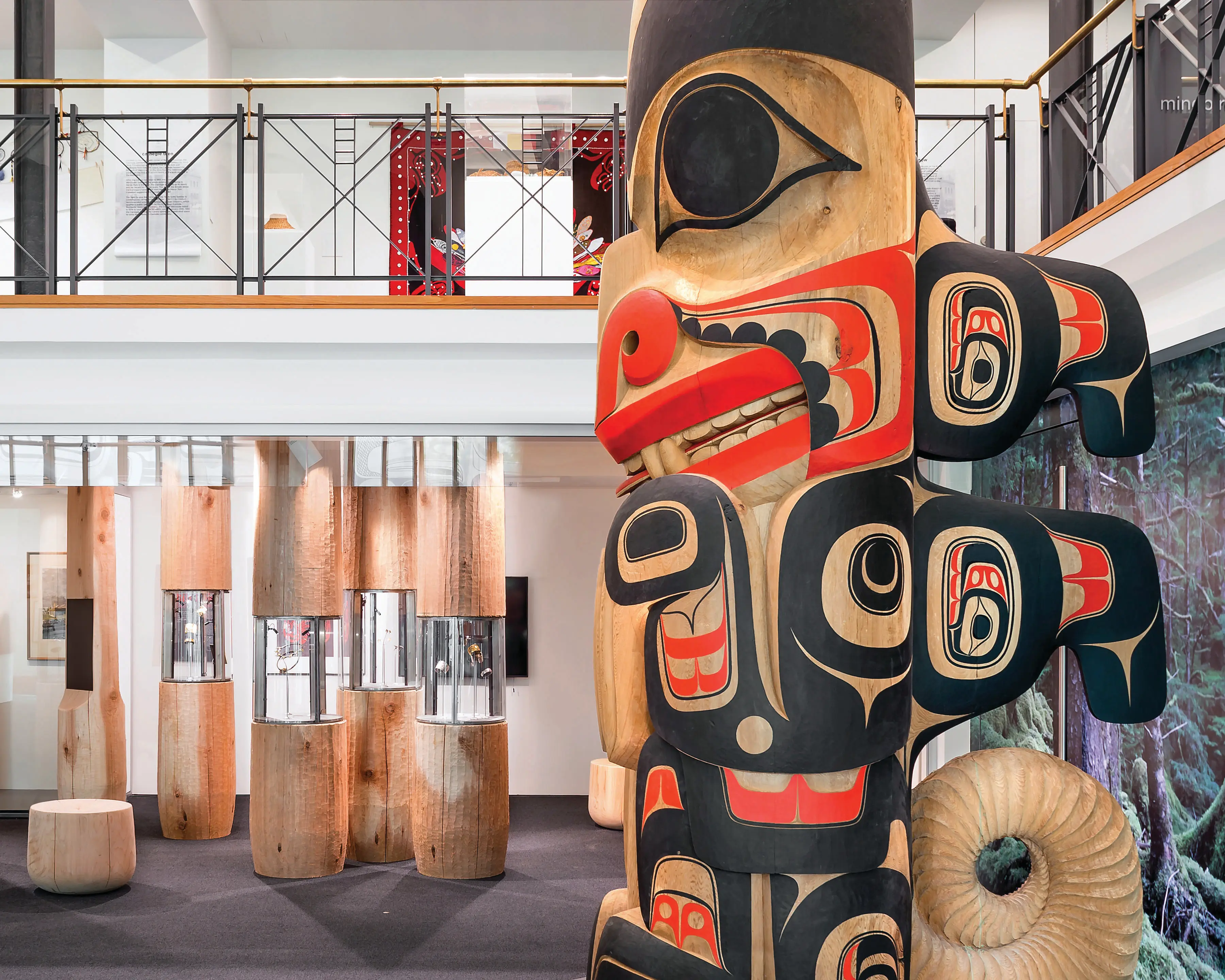
Inside the Bill Reid Gallery of Northwest Coast Art (C) Destination Vancouver
A deeply enriching cultural experience where students are introduced to the artistic legacy of Haida artist Bill Reid and other Northwest Coast creators. Programs are guided by Indigenous educators who share stories, symbolism, and the importance of art in preserving cultural identity. Students often participate in sketching activities or artifact analysis, helping them appreciate Indigenous knowledge and artistic traditions in a respectful, meaningful way.
13. Vancouver Art Gallery
The Vancouver Art Gallery offers curriculum-connected workshops that encourage students to think like artists and art historians. Through guided discussions, interactive tours, and hands-on studio activities, kids explore concepts like symbolism, perspective, and visual storytelling. Teachers love that the gallery tailors programs to different grade levels, making it easy for students to connect modern and historical artworks with what they learn in class.
14. Evergreen Cultural Centre (Coquitlam)
A friendly, creative space perfect for introducing students to both visual and performing arts. Workshops often include drama activities, collaborative artmaking, and guided gallery tours. Many teachers choose this trip because it gives students a chance to express themselves, work in groups, and understand how art communicates feelings and ideas—skills that translate into language arts, social studies, and more.
15. Vancouver Symphony Orchestra – Elementary Concerts

Hands up at the Cherniavsky Junior Club Elementary Concert Series (C) Vancouver Symphony
These concerts are specifically designed for young learners and feature engaging themes, narration, and visual elements. Students experience the power of live orchestral music while learning about instrument families, rhythm, and musical storytelling. It’s also a rare chance for kids to see professional musicians perform on stage, often inspiring them to explore music in school or at home.
16. Carousel Theatre for Young People (Granville Island)
Carousel Theatre specializes in age-appropriate performances that spark imagination and emotional literacy. Many shows address themes like friendship, courage, and empathy in ways children easily relate to. Teachers appreciate the pre- and post-show study guides that extend learning back into the classroom, helping students reflect on the characters, story arcs, and messages in the play.
ADVENTURE & PLAY-BASED FIELD TRIPS
17. Science World
Science World is a hub for hands-on exploration and discovery. Students can interact with hundreds of science exhibits, live demonstrations, and interactive labs designed to engage all learning styles. Popular activities include electricity experiments, engineering challenges, and physics demonstrations, making abstract concepts come alive. Teachers appreciate that Science World’s programs are aligned with BC’s STEM curriculum, encouraging curiosity, problem-solving, and teamwork.
18. Britannia Mine Museum

Underground at Britannia Mine Museum (C) Britannia Mine Museum.
A one-of-a-kind adventure that combines history, science, and excitement. Students can ride the underground mine train, pan for gold, and explore mineral exhibits. Curriculum-aligned workshops cover geology, mineral resources, and the history of mining in BC, while hands-on activities help students understand earth science concepts and human-environment interaction. It’s both thrilling and educational — a perfect blend of adventure and learning.
19. Kidtropolis
Kidtropolis is a miniature indoor city designed for younger students to role-play real-world jobs and civic responsibilities. Children explore offices, shops, and public service spaces, learning teamwork, social skills, and practical problem-solving in a safe, imaginative environment. Teachers value the way this playful learning experience builds confidence, communication, and creativity while reinforcing basic concepts about society and collaboration.
20. Playland
Playland offers a high-energy, fun-filled environment ideal for year-end school celebrations or special outings. With rides, games, and group booking rates for schools, students enjoy a day of excitement while learning about physics, motion, and coordination in action. It’s also a great way to celebrate student achievements and build camaraderie among classmates.
21. Grouse Mountain
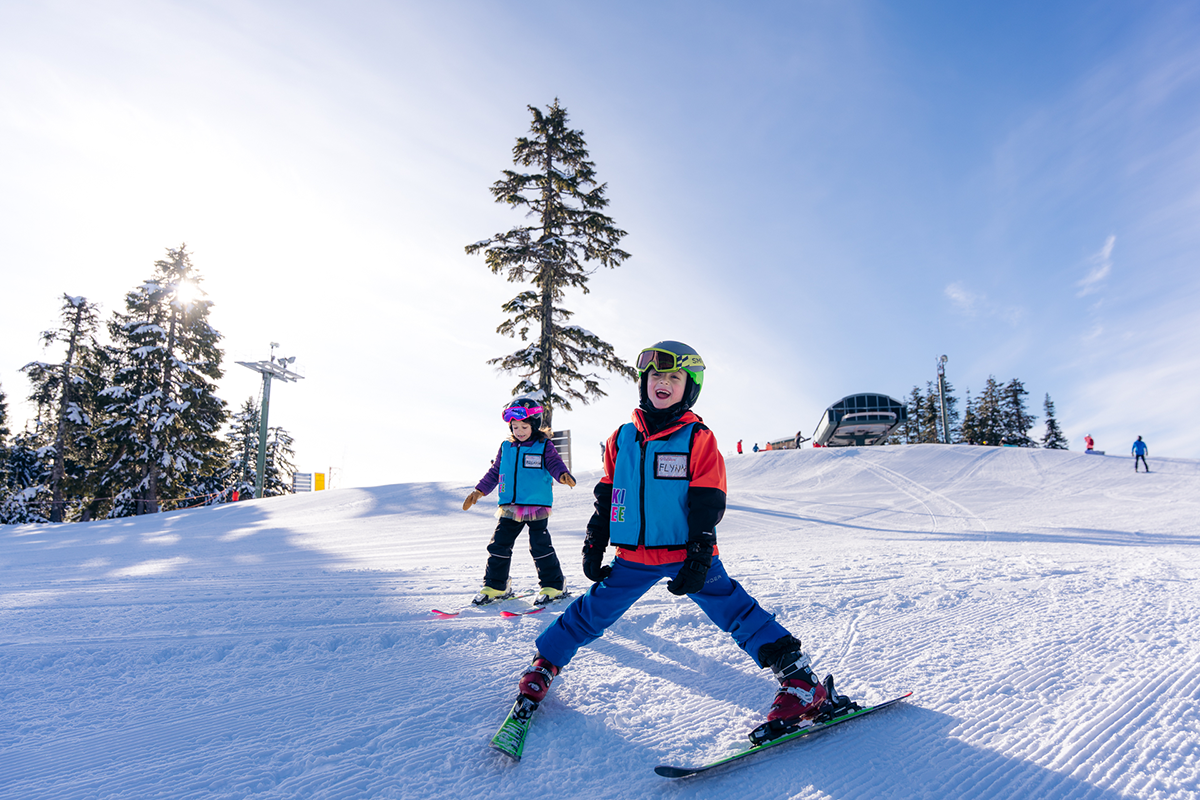
Grouse Mountain elementary program in action
An outdoor education hub with year-round activities. Students can experience owl talks, lumberjack shows, First Nations cultural presentations, snowshoeing, and mountain ecology programs. Each activity provides hands-on lessons in wildlife conservation, environmental science, and cultural history, all set against the stunning backdrop of Vancouver’s mountains. Teachers note that the combination of adventure and education boosts engagement and long-term learning retention.
22. Capilano Suspension Bridge Park
Students walk across the iconic suspension bridge, explore rainforest ecosystems, and learn about Indigenous cultural stories and traditions. The Cliffwalk and treetop trails offer thrilling perspectives of the forest, while interpretive programs teach about biodiversity, conservation, and geology. This field trip is perfect for combining adventure, outdoor learning, and cultural education in one memorable experience.
23. Sea to Sky Gondola (Squamish)
With breathtaking views of Howe Sound, the Sea to Sky Gondola offers students a chance to study alpine environments, forest ecosystems, and coastal biodiversity. Nature walks, interpretive panels, and guided lessons allow students to observe plants, wildlife, and geological formations firsthand, connecting classroom science lessons to real-world ecosystems. Adventure meets education in a safe and inspiring environment.
24. Fort Langley National Historic Site
This historic site immerses students in fur trading, gold rush history, Black pioneer stories, and Indigenous heritage. Interactive stations allow kids to handle historical tools, explore trading posts, and participate in reenactments, bringing Canadian history to life. Teachers can align visits with curriculum units on early settlements, economics, and social studies, making learning active and memorable.
25. Cultus Lake Adventure Park

(C) Cultus Lake Waterpark
A high-energy, outdoor adventure destination perfect for group field trips and team-building activities. Students can enjoy waterslides, climbing walls, and other attractions while also learning about safety, cooperation, and recreation management. This type of field trip combines fun and physical activity with opportunities to discuss risk management, teamwork, and environmental awareness.
Bringing the Learning Back to Class
A field trip doesn’t end when the bus returns — reflection and follow-up activities help students solidify new knowledge and connect it to classroom learning. Many of the destinations featured offer teacher kits, lesson plans, and activity guides to extend the field trip experience.
Teachers can also find post-trip worksheets, creative writing prompts, and project templates on platforms like TeachersPayTeachers, all aligned with BC curriculum standards. These resources make it easy to turn an engaging outing into lasting learning, encouraging discussion, critical thinking, and creative exploration back in the classroom
Frequently Asked Questions
- What are some good field trip ideas for elementary students in Vancouver?
Vancouver offers a wide range of options, from nature-based trips like Stanley Park and UBC Botanical Garden, to cultural and art experiences like the Bill Reid Gallery, and adventure-based outings like Science World or Grouse Mountain.
- How do I plan an educational field trip for kids?
Start by choosing a destination that aligns with your curriculum goals, check for available teacher resources, plan logistics like transportation and lunches, and include post-trip activities to extend learning back in the classroom.
- What’s the best time of year for field trips in BC?
Spring and fall are ideal for outdoor learning, while winter is perfect for indoor museums, galleries, and science centers. Summer offers longer days for adventure trips, parks, and nature exploration.
- What should students bring on a field trip?
Essentials include comfortable clothing, water, snacks or packed lunch, sunscreen, and rain gear if outdoors. Many schools also recommend a notebook or camera for reflection activities.
- Are there resources to bring the field trip learning back to the classroom?
Yes! Many destinations provide teacher kits, lesson plans, and activity guides, and platforms like TeachersPayTeachers offer post-trip worksheets, creative projects, and discussion prompts aligned with BC curriculum standards.
- Which Vancouver field trips are best for hands-on learning?
Nature and science trips like Stanley Park Ecology Society, UBC Botanical Garden, and Science World offer hands-on activities such as pond studies, plant investigations, and interactive experiments. History-focused options like Forbidden Vancouver’s school field trips use immersive storytelling and walking tours to bring Vancouver’s past to life.
- Are there field trips suitable for mixed-age elementary groups?
Yes! Locations like Maplewood Farm, Burnaby Village Museum, and Kidtropolis provide flexible programs that can be adapted for younger and older students at the same time, making them ideal for mixed-grade classes.
- How can field trips support social-emotional learning?
Adventure and play-based trips such as Playland, Grouse Mountain, or Cultus Lake Adventure Park help students develop teamwork, communication, empathy, and confidence while engaging in fun, shared experiences.
- Are there affordable field trip options in Vancouver?
Many local parks, walking tours, and cultural centers offer group rates, teacher discounts, or free educational programs. For example, Stanley Park Ecology Society and community gardens often have free or low-cost workshops that fit school budgets. Forbidden Vancouver Walking Tours offers a steep discount on its regular prices for school groups.
- Can field trips be tied directly to the BC curriculum?
Absolutely! Most museums, science centers, and historical sites offer curriculum-aligned programs, lesson plans, and hands-on activities that connect directly to BC Social Studies, Science, and Arts learning outcomes.


